Five centuries of arrival and change
The Galapagos were never untouched after people found them.
In March 1535, currents carried Fray Tomás de Berlanga, Bishop of Panama, away from his route to Peru. His account described tortoises, cacti, harsh terrain and a desperate search for water. It also placed the islands on the world’s maps.
A refuge for pirates
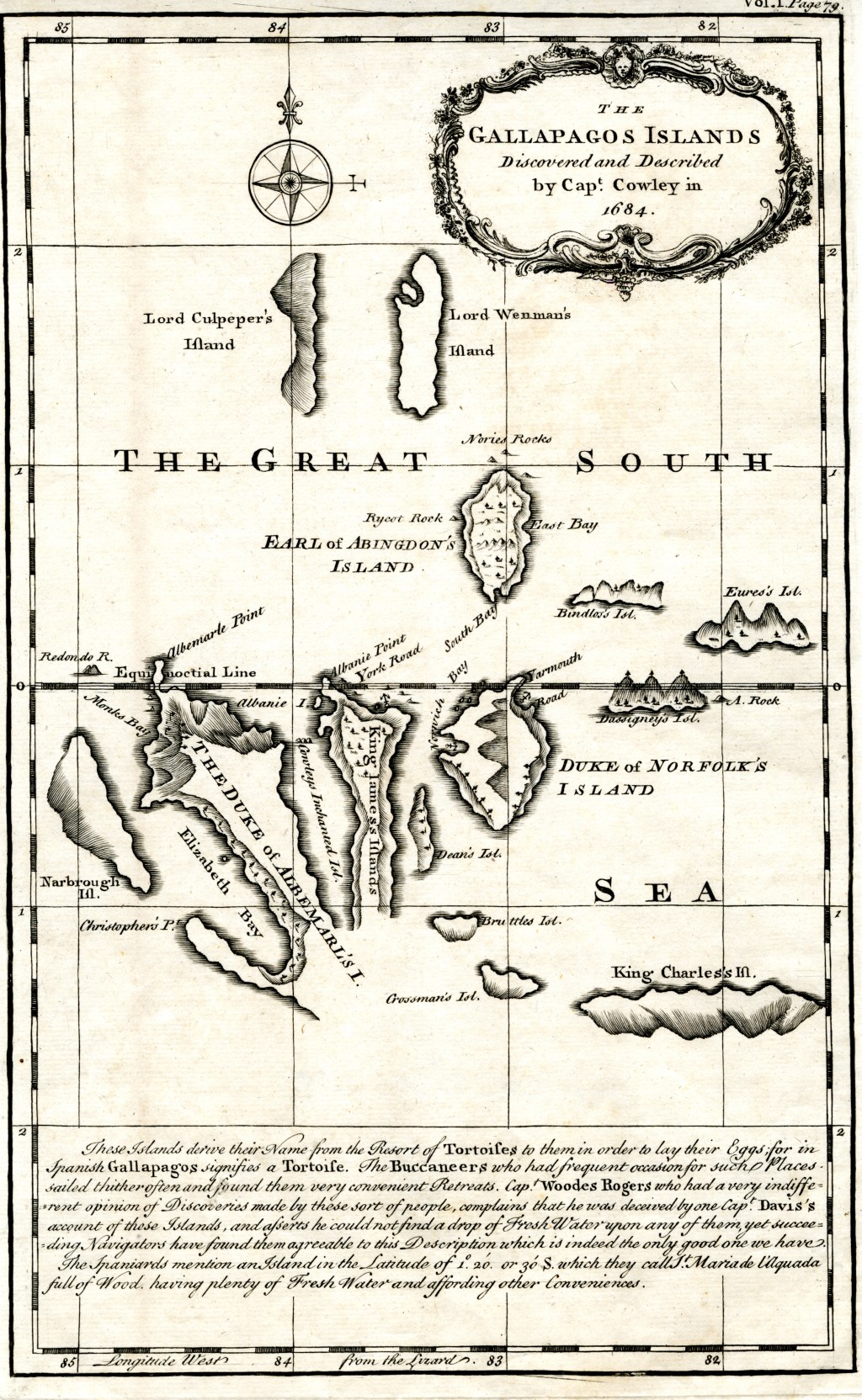
From the seventeenth century, privateers used the islands as a remote base near Spanish trade routes. They found refuge, food in the form of giant tortoises and a landscape where ships could disappear. William Dampier’s 1697 account helped introduce the English-speaking world to the islands. These visits probably brought some of the first invasive species and began the long decline of tortoise populations.
Whalers and a global resource frontier
By the late eighteenth century, British and American whalers moved into the Pacific as Atlantic whale populations declined. Galapagos waters and nearby productive seas became important whaling grounds. Crews collected vast numbers of giant tortoises, which could survive for months aboard ships, and hunted fur seals. The Post Office Barrel on Floreana emerged from this maritime world of passing vessels and shared messages.
Ecuador and settlement
Ecuador annexed the archipelago in 1832. Early colonization mixed enterprise, exile and hardship. Settlers harvested orchil lichen, tortoises and other resources, cleared highland vegetation and introduced donkeys, goats, pigs and cattle. Penal colonies, plantations, fishing and small settlements left social histories as dramatic as the landscape itself.
Darwin—and those who came after
Charles Darwin visited in 1835 aboard HMS Beagle. His observations of variation among islands later contributed to his thinking about natural selection. Scientists and collectors who followed expanded knowledge, but collecting also removed large numbers of animals and plants. The history of science in the Galapagos therefore contains both insight and impact.
From strategic outpost to protected archipelago
During the Second World War, the islands gained military importance. In the decades that followed, Ecuadorian leadership and international scientific cooperation established the foundations of modern conservation, including the Charles Darwin Foundation and Galapagos National Park. Research, species restoration and invasive-species eradication helped recover wildlife that exploitation had pushed toward extinction. In 1978 the Galapagos became one of the first UNESCO World Heritage Sites, with the marine reserve added as an extension in 2001; the islands were listed as World Heritage “in danger” in 2007 and removed from that list in 2010. The death of Lonesome George, the last Pinta Island tortoise, in 2012 marked the end of one lineage—even as the rediscovery of a Fernandina Island tortoise in 2019 showed the islands can still surprise us.
The tourism era
Tourism transformed the value of living wildlife. It also accelerated population growth, transport and construction. The history of the Galapagos is therefore not a march from exploitation to protection, but a continuing negotiation over who benefits, who decides and how much change an island system can absorb.
See the conservation challenge →

