Evolution in motion
Volcanoes, currents and isolation created a living laboratory.
In the Galapagos, the boundaries between land and sea, tropical and temperate, familiar and strange seem to dissolve. Penguins swim near reef fish. Marine iguanas graze underwater. Cormorants traded flight for a life of diving. Giant tortoises move between dry lowlands and humid highlands.
An archipelago built by fire
The islands rose from volcanic activity over a geological hot spot. Younger western islands remain stark, high and active; older eastern islands have been worn down by time. Across short distances, elevation and exposure create dry coasts, humid uplands, lava fields, mangroves, beaches and underwater cliffs.
Where oceans meet
The Humboldt, Panama and Cromwell current systems bring water with different temperatures and nutrients. Their interaction drives extraordinary marine productivity and helps explain why species associated with cold seas and tropical waters can occur in the same archipelago. Upwelling supports seabirds, marine iguanas, sea lions, sharks, rays, turtles and vast schools of fish. The northern islands of Darwin and Wolf hold the largest shark biomass recorded anywhere on Earth.
Icons—and relationships
Giant tortoises
Long-lived island engineers whose forms and movements reflect differences among islands and habitats.
Marine life
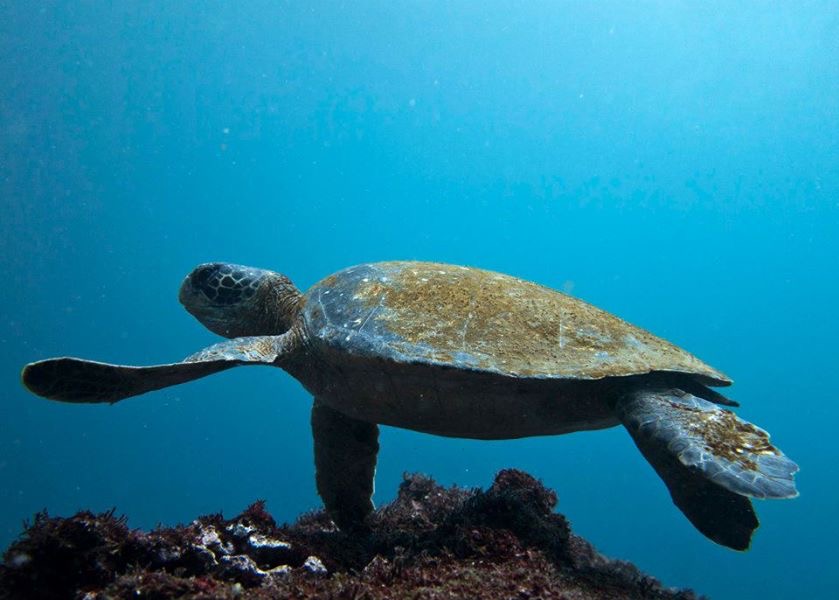
Whale sharks, hammerheads, Galapagos sharks, rays, turtles, sea lions, fur seals, dolphins and reef fish inhabit a marine crossroads.
Seabirds
Waved albatrosses, boobies, frigatebirds, penguins and flightless cormorants reveal adaptation, migration and dependence on ocean productivity.
Small wonders
Finches, lava lizards, carpenter bees, butterflies, spiders, crabs and plants hold equally important places in island ecosystems.
Behavior you can witness
The book records courtship, nesting, feeding, dominance, play and cooperation: albatrosses changing incubation duty; tortoises confronting one another by stretching to their full height; marine iguanas wrestling for dominance; sea lions investigating swimmers; frigatebirds displaying inflated throat pouches; and vampire finches drawing blood from boobies.
Trust is not permission
Wildlife may approach people, but visitors must not approach, touch, feed or disturb wildlife. Tameness is an evolutionary inheritance, not an invitation. The most respectful encounter allows the animal to choose the distance and continue its natural behavior.
Further reading: the Galapagos Conservation Trust’s guide to Galapagos wildlife and the Charles Darwin Foundation’s field and identification guides.

