What we said versus what happened.
In our 2009 book, we described conservation risks in the Galapagos. We said the self-reinforcing growth cycle of a tourism-driven economy was the greatest threat. We warned that local access rights would continue to leak to outside interests or turn into low-value, high-volume tourism. More tourism would continue to break down the ecological barriers and bring in more invasive species. Finally, we said that climate change might raise El Niño frequency and act synergistically with other impacts.
Seventeen years later, I thought it would be a good idea to see how things went. Visitor numbers grew from 6,000 in 1972 to 162,000 in 2007 and 329,475, 279,277, and 290,404 in 2023-25. Within those numbers, land-based tourism grew faster than boats. No one seems to have measured whether land-based tourism has been more equitable to local communities. The government created an agency in 2012 to run quarantine and manage the entry of invasive species. The Met Office is forecasting the strongest El Niño in living memory.
This blog looks at what happened biologically, how the islands were managed, and how shocks and changes have unfolded over the last 17 years.
Isolation, adaptation, and tameness are still core.
Galapagos is known for Darwin’s visit and his observations of mockingbirds and finches. The islands remain a model for evolutionary research. Peter and Rosemary Grant studied natural selection and speciation among Darwin’s finches from 1973 to 2012. The Grants published a paper in 2017 reporting a new lineage of individuals – the big bird. The new lineage arose from hybridization between a large cactus finch and a medium ground finch. This has become one of the strongest examples of speciation observed in real time.
Scientists have rediscovered Galapagos tortoises and clarified their genealogies. Genetic work on tortoises has found lost lineages. Lonesome George died in 2012, but he was not the last of his line. Floreana and Pinta genes turned up in tortoises on Wolf Volcano – remnants of whalers moving and corralling tortoises. Fernanda was found alive on Fernandina in 2019. She matches the specimen from that island found in 1906 and collected by Rollo Beck. Scientists also named a new tortoise species in 2015 from Cerro Fatal on Santa Cruz. Española’s tortoises, which started with twelve females and three males, including the famed Diego, now number more than 3,000. Emblematic populations are recovering.
Tameness costs iguanas their lives.
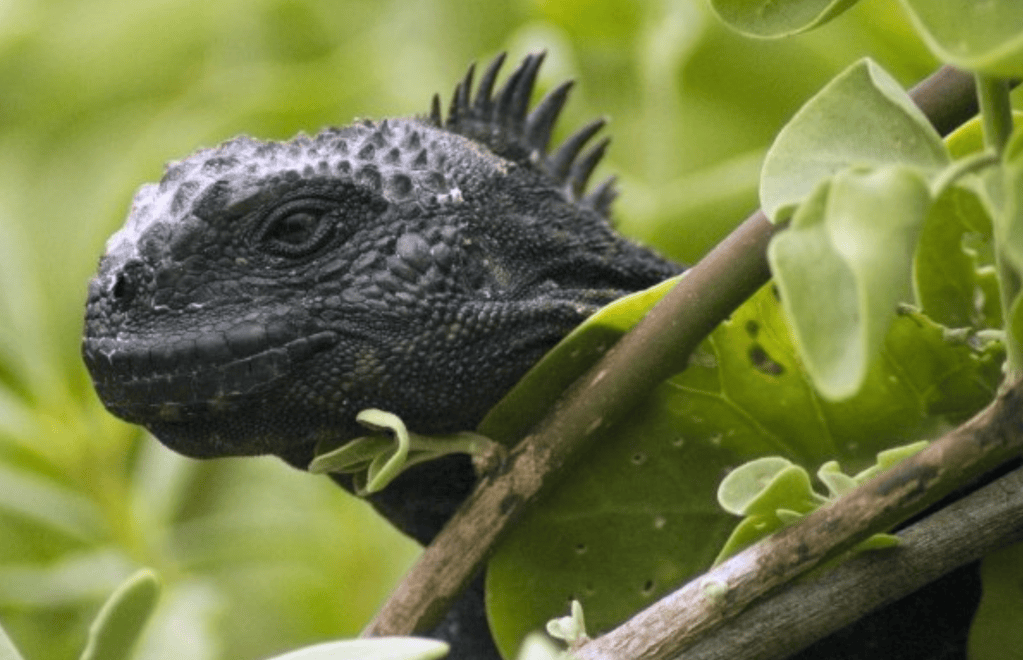
Our book discussed tameness and explained it through the absence of large predators. Marine iguanas in Puerto Ayora, Santa Cruz, still let people approach within about two meters. Marine iguanas learn to respond to threats after a few encounters. They do not learn quickly enough, as town dogs in Puerto Baquerizo drove the marine iguana population to near extinction. Tortuga Bay and the Charles Darwin Research Station see hundreds of visitors every day. Here, the marine iguanas show higher levels of stress hormones. Two scientists described the Isabela pink land iguana as a new species in 2009. The National Park found the first hatchlings and confirmed the species was reproducing in 2022. Feral cats and black rats still eat hatchlings that are unprepared for a predator their ancestors never saw. Invasive species continue as the greatest threat to Galapagos wildlife.
Invasive species were managed while tourism came onshore.
The Galapagos National Park Directorate continued to clear goats and other invasive species from islands. Santiago and northern Isabela were goat-free by 2006. The National Park removed rats from Rábida in 2011 and from Pinzón in 2012. The Australian ladybird beat the cottony cushion scale. But blackberry spread once the goats were gone. Philornis, fire ants, and Floreana’s cats and rats are still causing trouble.
Quarantine systems have been a priority to protect native and endemic species from invasive species. The government established a US$15 million invasive-species trust fund and the institution to manage the quarantine barrier. The biosecurity and quarantine control agency was established legally in 2012. It had 172 staff in 2024 and has survived four presidencies. Even so, records of new marine invasive species jumped from 5 to 53 since 2012, and the African giant snail has become one of the most aggressive invasives. Most focus on invasive arrivals has been on cargo and airports – but the main pathway here is hulls and ballast water.
The fleet froze; growth moved onshore.
The 1998 Special Law froze the number of cruise boats; then tourism moved onshore. Arrivals were about 162,000 in 2007 and 329,475 in 2023. In 2007 and 2011, about six in ten visitors slept on a boat at some point. By 2024 and 2025, 78-79% of visitors stayed on land. National visitation rose from about 24% of visitors in 2011 to 45% in 2024 and 38% in 2025, perhaps reducing as the fee increased. The number of berths in the fleet was frozen at 1,805 in July 2006; growth slowed from 10% per year to 3% per year from 2013 to 2022. On land, we recorded 65 hotels in 2006, but by 2024 there were about 300 accommodation businesses across all four islands. Residents owned most beds onshore in 2006, but no one has estimated the income flows or whether they have increased to local communities. Capital that could not buy a boat instead offered hotel or home accommodation.
The Governing Council of the Special Regime of Galapagos doubled the entrance fee to US$200 for foreign visitors about fifteen years after proposing it. A paper in 2007 proposed doubling the fee. The Council approved the doubling of the new fees in February 2024. The Assembly repealed the 1998 Special Law and replaced it with the Ley Orgánica de Régimen Especial de la Provincia de Galápagos (LOREG) in 2015, which governs the fees. The raised fee has not reduced the number of foreign visitors. The new fee has increased government revenue. The instrument works more effectively to raise finance than to change behaviors.
Two shocks the book missed and one we called.
No one foresaw the COVID-19 shock that emptied the islands. Tourism arrivals fell 73% in 2020, with three months at zero visitation. Almost everyone who depends on tourism, including 97% of guides, reported losing work. 56% of those working outside tourism also reported economic declines. The rebound came with domestic tourism – about 60% of visits in 2021, with shorter stays and lower spending. Tourism is somewhere between 50 and 80% of the Galapagos economy; its collapse was the worst economic crisis in the recorded history of the Galapagos. Food security also suffered from job losses, coupled with the need to find food in a disconnected archipelago. Local food production increased 218% between 2017 and 2021 – but still only met 42% of the demand.
President Lasso established Hermandad, a new 60,000-square-kilometer open-ocean reserve. Financing came from a debt-for-nature conversion, exchanging US$1.63 billion of bonds for a US$656 million loan in May 2023. This delivered about US$17.46 million a year for ocean management (US$12.05 million in grants, US$5.41 million for an endowment). Setting up the deal and the fund has been complex, requiring engagement across a wide range of stakeholders from commercial fishers to local communities.
This El Niño will test the islands.
The UK Met Office has called this El Niño the largest in living memory and unprecedented, likely to raise sea-surface temperature by 3°C above average. We expected more frequent El Niño events, and this event follows another in 2023-24. Expect marine animals to suffer, including marine iguanas, penguins, seabirds, and sea lions – everything that depends on the upwelling currents that bring food. The marine food web will likely collapse. In 1982-83, penguins declined by 77%, cormorants by 49%, and sea lions and fur seals by 25%, with the loss of all pups. In 1997-98, up to 90% of marine iguanas died on some islands. By 2004, the Galapagos penguins still had less than half of the pre-1982-83 El Niño population. Some algae seem to have disappeared, and the Galapagos damselfish and 24-rayed sea star have not been seen since. The big question is how the 2026-27 event will interact with the changes in tourism and affect the human population on the islands.
Setting a ceiling on beds remains.
The Council has an approved vision for the future through the 2015 LOREG. The law establishes the governance architecture, restricts national rights (including limiting migration), and grants preferential rights to residents. The Council is limiting the number and types of hotels. The challenge is to cap the number of beds, including unregistered ones. The islands have about 300 registered accommodation businesses, but also 1,300 short-term rental listings. The Galapagos National Park has controls at the site and berth levels, but not across the archipelago. Placing a ceiling on both onshore and in-boat beds would stabilize growth on the islands and set the mix. Pete and I trained as guides in 1987. I think there may have been 20-30 of us on that course. There were 350 guides active in 2009 and 700 guides active in 2024. Knowing the number of visitors helps in four ways. Planners can size infrastructure needs. The ceiling would allow more effective public investment planning in water, waste, energy, and transportation. Biosecurity can shift from losing rearguard actions to addressing a specific design challenge. The change will give the private sector long-term clarity. Finally, the mix will help fix benefit flows to communities through ship berths and hotel beds. The Council also needs data to monitor progress and course correct. Monitoring visitor spending, money flows, bed capacity and occupancy, invasive species status, and fee revenues and public spending is crucial.
 Galapagos: Both Sides of the Coin
Leave a comment